 INR
INR



Best Operating Systems for AI Servers in 2026: Ubuntu vs Rocky Linux vs Debian
Choosing the right operating system for an AI server directly affects GPU driver stability, accelerator performance, container orchestration, security, and overall infrastructure reliability. Whether you are training large machine learning models or serving low-latency inference workloads, the operating system provides the foundation between your physical hardware and the AI frameworks running on top of it.
For most AI workloads, Ubuntu Server, Rocky Linux, and Debian are among the Linux distributions worth considering. Each has different strengths when it comes to GPU drivers, enterprise stability, system overhead, containerization, and large-scale cluster management.
In this guide, we compare Ubuntu Server LTS, Rocky Linux, and Debian for AI servers and explain which type of workload each operating system is best suited for.
Ubuntu vs Rocky Linux vs Debian for AI Servers
Ubuntu Server LTS is generally focused on broad AI ecosystem compatibility, while Rocky Linux is designed around enterprise and HPC environments, and Debian provides a lightweight and highly customizable foundation for dedicated infrastructure.
| Operating System | Best Use Case | GPU & AI Ecosystem | System Overhead |
|---|---|---|---|
| Ubuntu Server LTS | AI training, R&D, production inference | Broad ecosystem compatibility | Moderate |
| Rocky Linux | Enterprise HPC and large compute clusters | Enterprise-focused | Low–Moderate |
| Debian Stable | Dedicated inference and bare-metal hosts | Highly customizable | Minimal |
1. Ubuntu Server: The Industry Standard for AI Servers
An Ubuntu AI server is a common choice for machine learning labs, cloud environments, developers, and enterprise AI teams because of its broad hardware and software ecosystem.
Ecosystem Compatibility
Ubuntu LTS releases are widely supported across the AI ecosystem, including NVIDIA CUDA-based environments and popular machine learning frameworks. This broad compatibility can simplify GPU driver installation and infrastructure deployment.
Framework Support
Popular frameworks and AI infrastructure tools such as PyTorch, TensorFlow, JAX, and vLLM are commonly deployed on Ubuntu-based environments. This makes Ubuntu a practical choice for teams that want access to a large ecosystem of documentation, packages, containers, and community support.
Kernel and Container Tooling
Ubuntu provides strong support for modern container and orchestration technologies including Docker, containerd, Kubernetes, and MicroK8s. Teams can therefore build AI environments that range from a single GPU server to larger containerized deployments.
Best For
Ubuntu Server LTS is well suited for:
- AI and machine learning development
- GPU server deployments
- Model training and inference
- AI VPS environments
- Docker and Kubernetes workloads
- Teams looking for broad software compatibility
2. Rocky Linux: Enterprise-Grade Stability
For organizations that prefer a Red Hat Enterprise Linux-compatible environment, Rocky Linux provides an enterprise-oriented Linux platform without requiring a commercial RHEL subscription for the operating system itself.
RHEL Compatibility
Rocky Linux is designed to provide binary compatibility with Red Hat Enterprise Linux. This makes it attractive for organizations that already use enterprise Linux tools, workflows, and administration practices.
HPC and Slurm Integration
Rocky Linux can be used in high-performance computing environments where technologies such as Slurm, OpenMPI, and distributed storage systems form part of the infrastructure stack.
Security and Compliance
Rocky Linux includes SELinux and enterprise-oriented security capabilities, making it a potential fit for organizations that require controlled system configurations and security-focused infrastructure management.
Best For
- Enterprise AI infrastructure
- HPC environments
- Slurm-based compute clusters
- Organizations familiar with RHEL-based systems
- Long-lived production infrastructure
3. Debian: Minimalist and Resource-Efficient
For teams that prefer a lightweight and highly customizable Linux foundation, Debian can be a strong option for dedicated AI infrastructure.
Low System Overhead
Debian can be installed with a minimal package set, allowing administrators to avoid unnecessary services and reserve system resources for workloads running on the server.
Stability
Debian Stable emphasizes conservative package updates and system stability, which can make it suitable for dedicated infrastructure where predictable behavior is important.
Customization
Because Debian provides a relatively unopinionated base system, experienced administrators can customize GPU drivers, container runtimes, networking, storage, and other components according to their infrastructure requirements.
Best For
- Dedicated inference servers
- Lightweight AI infrastructure
- Bare-metal container hosts
- Edge AI deployments
- Experienced Linux administrators
AI Server Operating System Comparison
| Operating System | Best Use Case | GPU / AI Ecosystem | Release Model | System Overhead |
|---|---|---|---|---|
| Ubuntu Server LTS | AI training, R&D, production inference | Broad hardware and AI software ecosystem | LTS releases | Moderate |
| Rocky Linux | Enterprise HPC and compute clusters | Enterprise and RHEL-compatible ecosystem | Long enterprise lifecycle | Low–Moderate |
| Debian Stable | Dedicated inference and bare-metal hosts | Highly customizable | Stable release model | Minimal |
Scaling AI Servers to Distributed Clusters
A single AI server eventually reaches the limits of its available CPU, memory, GPU, storage, or network capacity. Larger AI workloads can therefore require multiple interconnected servers working together as a distributed cluster.
When deploying multi-node AI infrastructure, operating-system consistency becomes increasingly important. Every node should use compatible kernel, GPU driver, networking, container, and orchestration configurations.
Maintain Consistent Kernel and GPU Driver Versions
Keep kernel versions and GPU driver baselines consistent across cluster nodes whenever possible. Configuration differences between nodes can introduce difficult-to-diagnose compatibility and communication problems.
Use High-Speed Networking
Distributed AI workloads can require high-throughput, low-latency networking between compute nodes. Depending on the infrastructure, technologies such as InfiniBand or RoCE-based Ethernet can be used to connect GPU servers.
Choose an Orchestration Platform
Kubernetes and Slurm are two common approaches for managing larger compute environments. Kubernetes is widely used for containerized applications and service orchestration, while Slurm is commonly used for HPC and scheduled compute workloads.
Which Operating System Should You Choose for an AI Server?
The right operating system depends on your AI workload, hardware, existing infrastructure, and level of Linux administration experience.
| Your Requirement | OS to Consider |
|---|---|
| General AI development and GPU workloads | Ubuntu Server LTS |
| Enterprise or RHEL-compatible infrastructure | Rocky Linux |
| Minimal and highly customized servers | Debian Stable |
| Containerized AI applications | Ubuntu Server LTS or Debian |
| HPC and Slurm environments | Rocky Linux or another compatible enterprise Linux distribution |
Need an AI VPS or GPU Server?
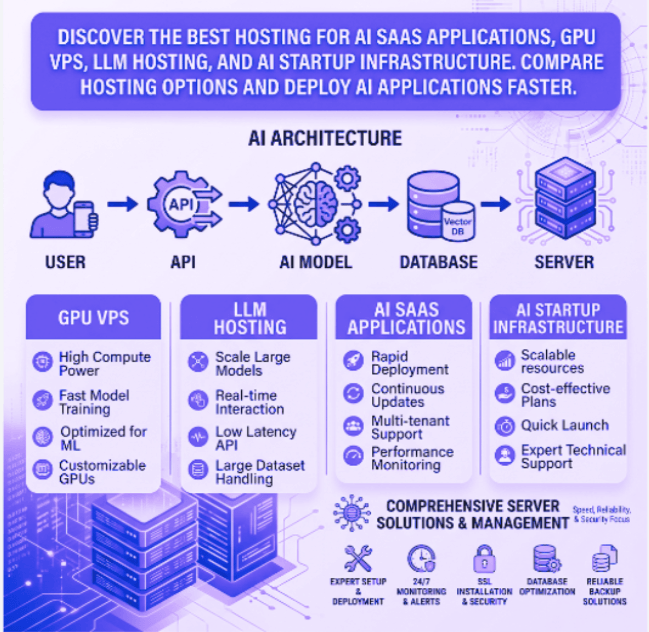
Choosing the operating system is only one part of building reliable AI infrastructure. Your GPU, CPU, RAM, NVMe storage, network connectivity, and virtualization environment also have a major impact on model training and inference performance.
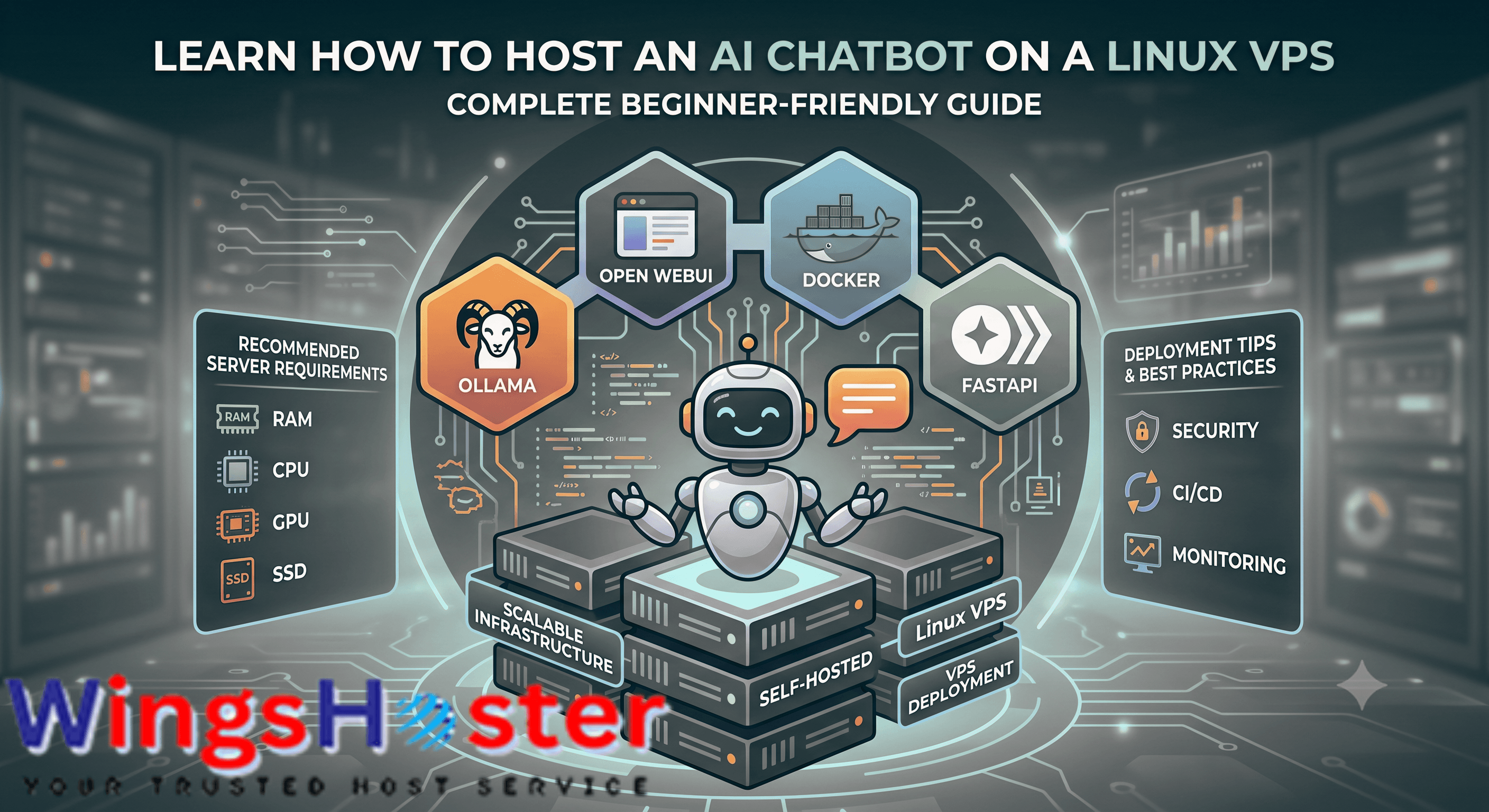
If you are planning to run Ollama, vLLM, Docker-based AI applications, or GPU-accelerated workloads, WingsHoster provides VPS and dedicated server infrastructure that can be configured around your workload requirements.
Explore VPS Hosting or request a custom quote for an AI infrastructure configuration tailored to your requirements.