
 INR
INR


What Is Shared Hosting? The Complete Beginner's Guide (2026)
Starting your first website can feel overwhelming. One of the first decisions you'll face is choosing the right hosting plan.
For beginners, bloggers, freelancers, and small businesses, shared hosting is often the most affordable and practical option.
In this guide, we'll explain what shared hosting is, how it works, its advantages and disadvantages, and whether it's the right fit for your website.
What Is Shared Hosting?
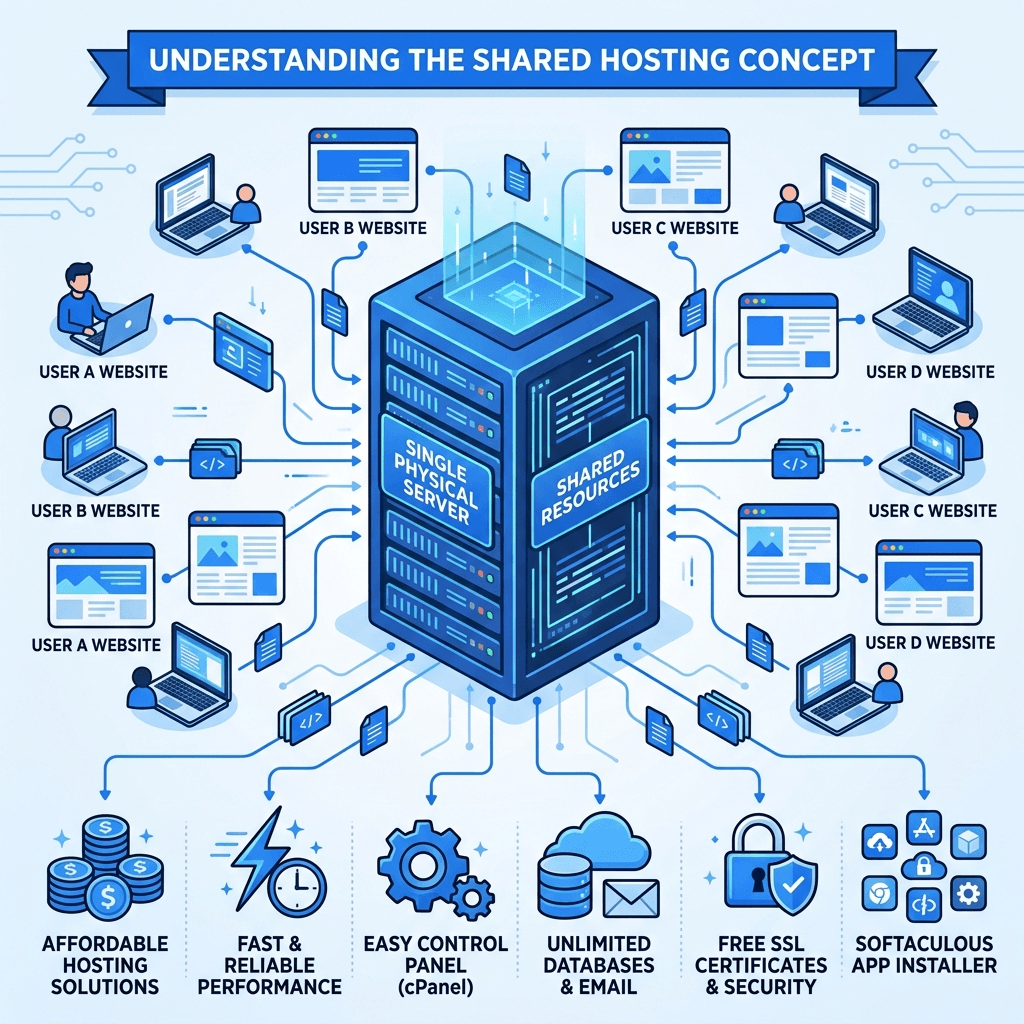
Shared hosting is a type of web hosting where multiple websites share the same server resources.
These resources include:
- CPU
- RAM
- Storage
- Bandwidth
- Network connectivity
Because the server costs are shared among many users, shared hosting remains one of the most affordable hosting options available.
How Does Shared Hosting Work?
Think of shared hosting like living in an apartment building.
You have your own apartment (website), but you share common resources such as electricity, water, and maintenance with other residents.
Similarly, your website operates independently while sharing server infrastructure with other websites.
Benefits of Shared Hosting
Affordable Pricing
Shared hosting is ideal for beginners and small businesses because it offers low monthly costs.
Easy to Use
Most providers offer user-friendly control panels like cPanel, making website management simple.
No Technical Knowledge Required
The hosting provider manages server maintenance, updates, and security.
One-Click Installers
Install applications like WordPress, Joomla, and Drupal in minutes.
Email Hosting Included
Create professional email addresses using your domain name.
Disadvantages of Shared Hosting
Limited Resources
Since resources are shared, heavy traffic on neighboring websites can impact performance.
Less Customization
You won't have root access or complete server control.
Not Ideal for High-Traffic Websites
Large eCommerce stores and enterprise applications often require VPS or Dedicated Hosting.
Who Should Use Shared Hosting?
Shared hosting is perfect for:
- Bloggers
- Small business websites
- Portfolio websites
- Startup companies
- Freelancers
- Local businesses
- Personal websites
- Informational websites
Shared Hosting vs VPS Hosting: Which Is Better?
| Feature | Shared Hosting | VPS Hosting |
|---|---|---|
| Cost | Lower | Higher |
| Resources | Shared | Dedicated |
| Performance | Moderate | Better |
| Root Access | No | Yes |
| Scalability | Limited | Flexible |
| Technical Skills | Minimal | Moderate |
| Best For | Beginners | Growing websites |
When Should You Upgrade from Shared Hosting?
You should consider upgrading when:
- Website traffic increases significantly.
- Your website becomes slow.
- You require custom server configurations.
- You're running resource-intensive applications.
- You need better performance consistency.
How to Choose the Best Shared Hosting Provider
Look for:
- SSD or NVMe storage
- Free SSL certificates
- Daily backups
- Malware protection
- 99.9% uptime guarantee
- cPanel access
- One-click installers
- 24/7 support
- Transparent pricing
Ready to Launch Your Website?
Shared hosting remains one of the best choices for beginners and small businesses looking to establish an online presence without breaking the budget.
Whether you're launching a blog, portfolio, or business website, choosing the right hosting provider can make all the difference.
Explore WingsHoster's Shared Hosting plans and start building your online presence today. Visit our Shared Hosting Plans with high-performance NVMe SSD storage for faster website loading speeds.