
 INR
INR


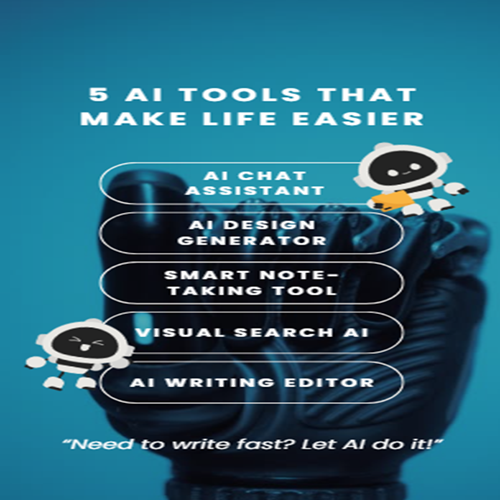
🚀 AI Tools Every Startup Should Use in 2026
In 2026, startups are expected to achieve more with smaller teams, shorter timelines, and limited budgets. To keep up, many are turning to AI tools that can streamline research, generate content, automate routine tasks, accelerate design, and simplify product development.
The question is no longer whether startups should adopt AI—it’s about choosing the right tools that genuinely improve efficiency without adding unnecessary complexity. This list highlights practical AI solutions that help startups operate faster and smarter in their day-to-day activities.
1. ChatGPT
ChatGPT continues to be one of the most flexible AI tools available for startups. It supports a wide range of tasks, including idea generation, content creation, customer communication, research summaries, and internal documentation.
For small teams, it works like an on-demand assistant that can handle both strategic thinking and execution. Founders can quickly create landing page content, email campaigns, investor updates, and product descriptions—making it ideal for producing fast first drafts that can later be refined.
2. Perplexity
Perplexity is a powerful tool for research, offering quick answers backed by citations and up-to-date information. This makes it particularly valuable for understanding competitors, market trends, pricing strategies, and industry insights.
Instead of spending hours browsing multiple sources, startups can use Perplexity to get a clear and reliable starting point. It’s especially useful for founders, marketers, and product teams who need accurate information to make informed decisions.
3. Notion AI
Notion AI helps startups centralize their work by combining notes, tasks, planning, and knowledge into a single platform. Early-stage teams often struggle with scattered information across different tools, and Notion solves this problem effectively.
With its AI features, teams can summarize meetings, generate action items, create project briefs, and maintain organized documentation. It’s a great solution for startups looking to keep everything structured and accessible in one place.
4. Zapier
Zapier is one of the leading automation tools that enables startups to connect thousands of apps and reduce manual work. It allows teams to create workflows between tools like forms, CRMs, email platforms, spreadsheets, and support systems—without needing custom development.
This is especially useful for automating processes such as lead capture, follow-ups, reporting, and administrative tasks. For lean teams, automation like this can save significant time and allow more focus on growth-related activities.
5. Canva AI
Canva AI is an excellent tool for creating designs, social media content, presentations, and branding materials. Startups often need professional visuals quickly, and Canva makes this possible even without a dedicated designer.
It can be used to design ads, pitch decks, blog graphics, and social media posts while maintaining a consistent brand identity. It’s one of the easiest ways for startups to present themselves professionally from the beginning.
💡 Why These Tools Matter
These five tools cover the essential areas of a startup workflow: research, content creation, organization, automation, and design. Together, they help teams move faster without increasing operational complexity.
For example, when launching a product, a startup can:
- Use Perplexity for market research
- Create content with ChatGPT
- Plan execution in Notion AI
- Automate workflows using Zapier
- Design visuals with Canva AI
This combination creates a smooth and efficient workflow from idea to execution.